
Coming soon · Release date TBA
UpdatedThe Witcher IV Unreal Engine 5: PS5 Performance Guide
The Witcher IV Unreal Engine 5 demo runs at 60 FPS on PS5 with ray tracing. Explore foliage, crowds, streaming, and what this showcase means for players.
Jump to
Does The Witcher IV Use Unreal Engine 5?
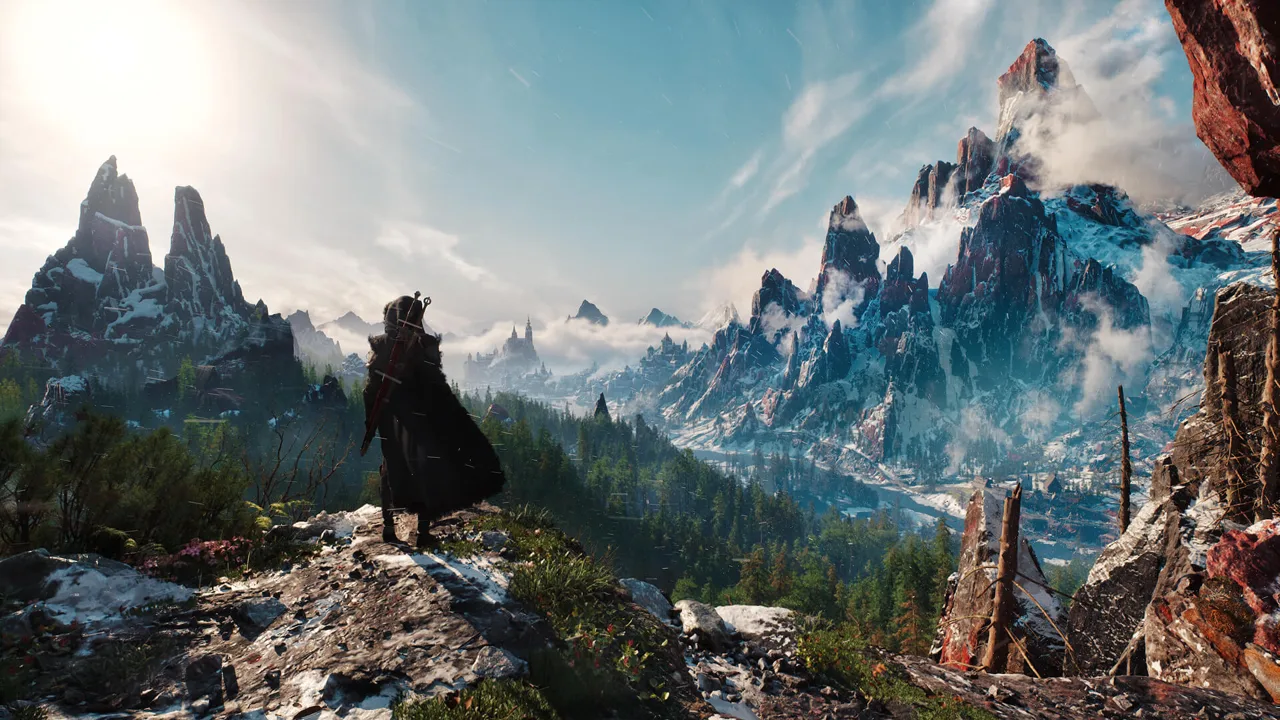
The Witcher IV Unreal Engine 5 tech demo runs on a standard PlayStation 5 at 60 FPS with ray tracing. The game uses customized UE5 technology for dense forests, world streaming, and crowded towns. The June 3, 2025, demonstration showcases engine capabilities, separate from the game’s eventual gameplay and performance.
That distinction matters when judging the footage. CD PROJEKT RED and Epic Games built a technological showcase set in Ciri’s world, using a monster contract to connect its environments and character systems.
June 3, 2025, Tech Demo Performance
| Detail | Demonstrated result |
|---|---|
| Hardware | Standard PlayStation 5 |
| Frame rate | 60 FPS |
| Lighting feature | Ray tracing |
| Animated crowd | Over 300 skeletal mesh agents |
| Environment | Kovir’s wilderness and the port town of Valdrest |
The earlier December 2024 reveal serves a different purpose. That cinematic was pre-rendered in a custom UE5 build using an NVIDIA GeForce RTX GPU. The June 2025 presentation demonstrated technology running live on console hardware.
Official page: The Witcher 4 (thewitcher.com)
Nanite Foliage Gives Kovir Its Dense Forests
Kovir’s forests are a substantial part of the engine challenge. Trees need to hold their shape across long distances, respond to lighting, and fill the landscape without overwhelming memory or rendering resources.
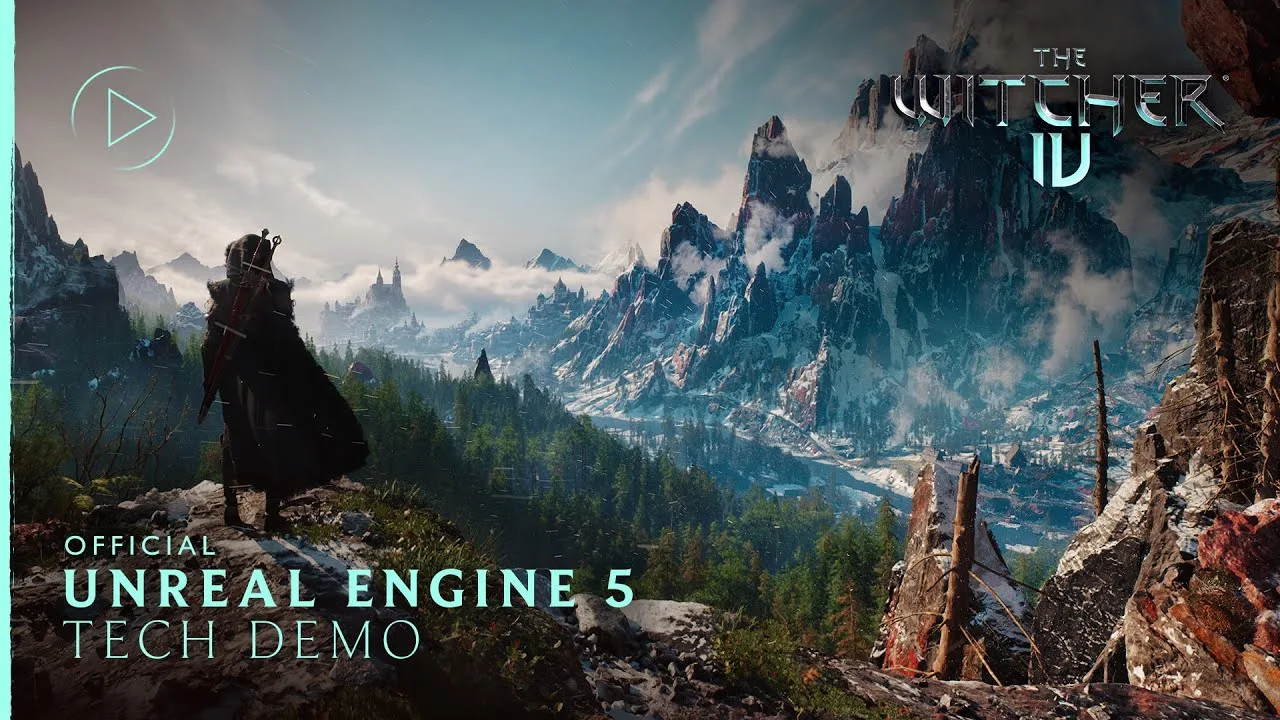
Nanite Foliage tackles that problem with detailed geometry and an adaptive voxel representation. Artists can model individual leaves and pine needles, while distant clusters of geometry become small, three-dimensional volumes. At a distance, those volumes are no larger than a pixel and still respond to the changing sun and shadows.
For players, the benefit is vegetation that contributes to the scene’s depth and lighting across a broad view. Branches can also sway in the wind, helping the forest feel active while Ciri rides through it.
The performance goal is specific: make dense, detailed vegetation practical to render within the demo’s frame budget. Its forests are part of the workload behind that 60 FPS demonstration.
Fast Geometry Streaming Keeps the World Loading During Travel
A detailed landscape also has to load quickly enough to keep up with movement. The demo crosses mountainous terrain, valleys, and forests before reaching Valdrest, putting world streaming alongside foliage rendering as a central performance concern.
Fast Geometry Streaming, also called FastGeo Streaming, accelerates the loading of static geometry. It uses a lightweight method to register and unregister assets as the environment streams in and out.
The showcase’s rapid camera movement provides a useful example: the view travels through the landscape and catches up with Ciri without visible loading interruptions or object pop-in.
That technology matters during horseback exploration because moving quickly continually changes which parts of the world need to be loaded. FastGeo’s role is to get those environmental assets ready smoothly as the view changes.
Valdrest’s Crowds Put Animation and Simulation to Work
Valdrest tests a different side of performance. Its market combines merchants, customers, moving clothing, conversations, and reactions to Ciri’s presence.
Two systems carry distinct parts of that work:
- Unreal Animation Framework handles character animation workflows, including blending, state machines, and procedural animation.
- Mass Framework manages crowd simulation and AI behavior through a data-driven design.
The demonstration includes over 300 animated skeletal mesh agents while staying within its 60 FPS budget. The animation optimizations also leave room on the game thread for additional gameplay systems.
Mass is designed to manage thousands of agents efficiently, but that capacity is separate from the demo’s specific count of animated skeletal characters.
The market’s apple-crate interaction shows why these systems matter beyond crowd size. Ciri bumps into a carrier, apples spill downhill, and nearby children and pigs react. Smart Objects help support those interactions, while MetaHuman tools and Chaos Cloth contribute to character detail. The result is a town whose inhabitants participate in what happens around them.
Ciri and Kelpie Share More Responsive Animation
Horseback travel gets its own set of improvements. Multi-character motion matching synchronizes Ciri and Kelpie during mounting, including approaches from different angles and at different speeds.
Kelpie also uses root-motion movement, helping her movement feel grounded. This connects the horse’s animation more closely to how she moves through the environment.
ML Deformer adds another layer by approximating complex body deformations efficiently. Alongside improvements to the Chaos Flesh Solver, it allows Kelpie’s muscles to move and stretch beneath her skin.
These details address both control and appearance. Mounting needs to connect smoothly, the horse needs to move convincingly, and muscle animation needs to fit into the same performance budget as the surrounding world.
PC, PlayStation, Xbox, and the Planned Release Window
CD PROJEKT RED’s collaboration with Epic began in 2022 and includes developing new tools and improving existing UE5 systems for large open worlds. The technology is intended to support the game across PC, PlayStation, and Xbox.
The demonstrated tools are also being developed for the wider Unreal Engine community, with releases beginning alongside Unreal Engine 5.6. That rollout covers an ongoing collection of improvements rather than a single finished package.
For players planning around Ciri’s next adventure, the September 2, 2026, development update gives The Witcher IV a planned release window of 2028.
Continue with
 The Witcher IV 60 FPS: What The PS5 Demo Actually ShowsThe Witcher IV 60 fps demo runs on a standard PS5 with ray tracing. Explore the technology behind its forests, crowds, and seamless open-world traversal.
More in Performance
See all Performance
Continue exploring
Join the community
Official channels for news, updates and player help: